

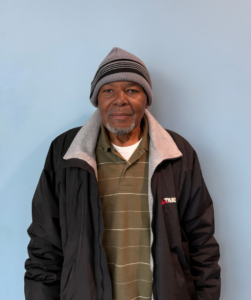
 Floyd Cross has lived many lives in one. His story begins across several states, moving from home to home after losing his mother before he was old enough to remember her. Her absence weighed heavily on his father, who turned to drinking, eventually leading Floyd, the youngest child, into foster care. His childhood was rough, he says plainly, but he survived it. And between the hardship were a few meaningful moments that helped shape him.
Sports became one of those lifelines. Over time, discipline became his anchor. In 1971, he entered the world of professional fighting, stepping into the ring with grit and purpose. He fought until 1982, appearing on ESPN three or four times, a point of pride even now. Boxing did not just shape his body; it shaped his life, teaching him focus, control, and the ability to stand back up no matter how hard he had been hit.
Now, as he approaches his 79th birthday, Floyd is grateful to still have good health. He speaks of his past with surprising honesty. “A lot of people think incarceration is bad, but it helped me grow up.” After serving a 20-year sentence, he was released to a transitional program at Fort Des Moines. On May 18th, 2025, he arrived at Central Iowa Shelter and Services, and that day changed everything.
During his pat down to enter the shelter, he met client advocate Katario Patton. They exchanged a few words, nothing dramatic, but something clicked. Floyd remembers thinking almost immediately that this was someone who saw him, not his past. That brief introduction became a turning point. They knew they had to stay together. Since then, Katario has been one of the greatest sources of support in his life. “The people here treat me decently,” he says, but Katario has been his rock.
A short time later, Floyd was approved to move into the permanent housing units upstairs. Before settling in, he had a choice: stay at CISS or move to LC Mason Manor. He and Katario weighed the pros and cons carefully. In the end, the security of CISS and being close to the one person who had guided him since day one made the decision clear. He chose to stay.
Nearly a year later, that decision continues to shape his journey. As his one-year mark approaches, Floyd will have another choice to make. His time at CISS will result in a Section 8 voucher, allowing him to move into the community if he chooses. He has not decided yet. The freedom is new, and he is taking his time, but he knows one thing for certain: wherever he goes, “Katario will always be there.”
These days, Floyd lives quietly and intentionally. He visits his client advocate often. “He is just downstairs,” he says, and he enjoys the independence he has reclaimed. He manages his own appointments, schedules his rides, handles his medications, and enjoys the peace of having his own space after twenty years without a moment alone. To Floyd, stable housing is not just shelter. It is the ability to breathe, think, and live again without constant restriction.
Looking back, Floyd says faith is what kept him alive through the hardest years. “God was a big factor,” he says with conviction.
Since getting housing, he is most proud of the internal progress he has made, his growth, his wisdom, and his ability to deal with life’s challenges differently than he once did. “I did not used to think like this,” he reflects. “But as I have gotten older, I have gotten a little wiser.”
He still has goals, even at 79. His biggest is a heartfelt one: getting to California to visit his only living relative, his 96-year-old sister Mary, who is very ill. Time is moving quickly, and he hopes to get there soon.
His journey from childhood loss to the boxing ring, to incarceration, to rebuilding his life at CISS, is proof that a person is not defined by where they have been but by who they choose to become. As Floyd puts it, life is about change, growth, and wisdom gained over time. And at nearly 79 years old, he is still rising, still learning, and still moving forward one steady step at a time.